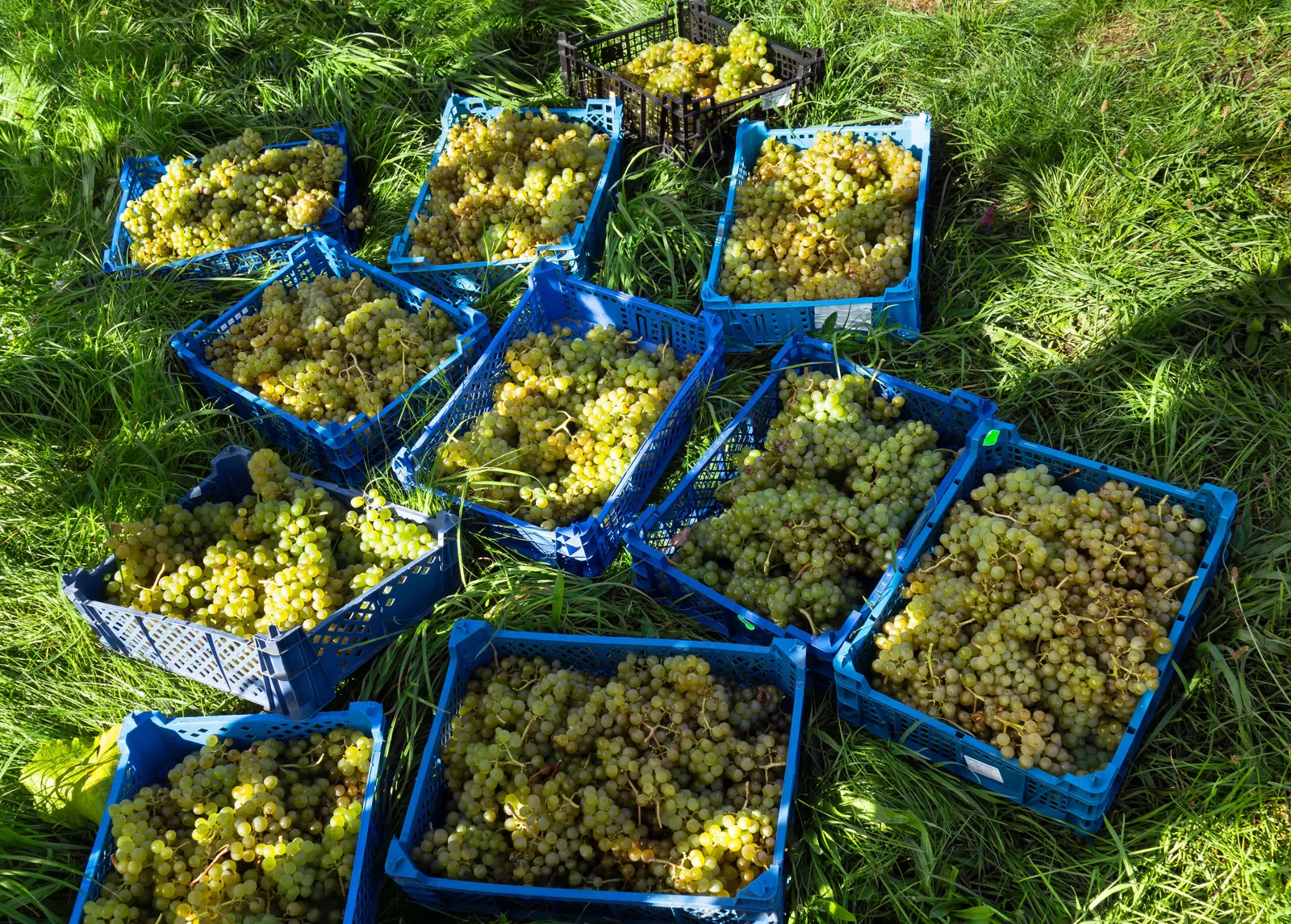

The fruit
Table grapes
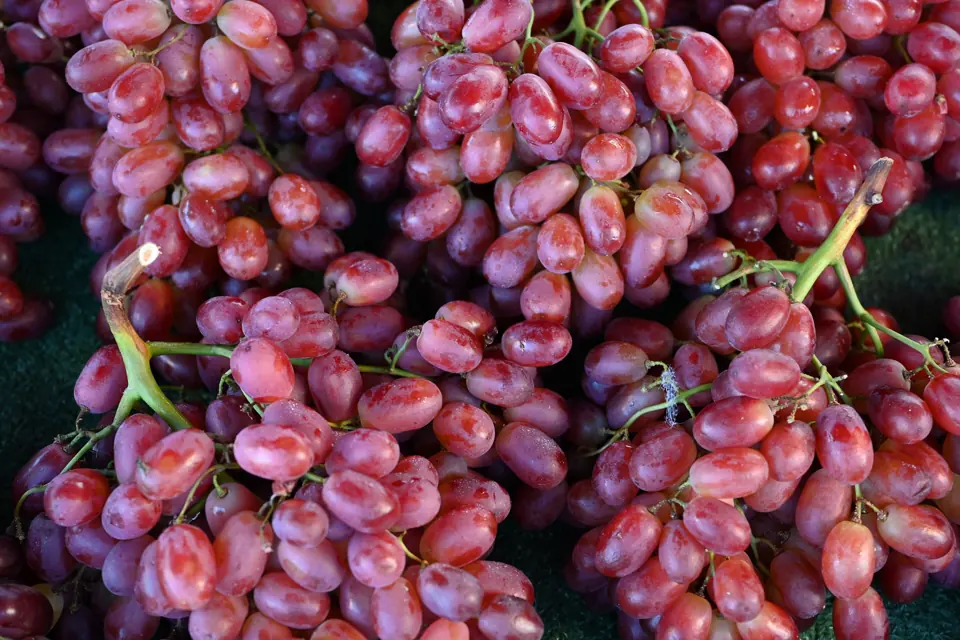
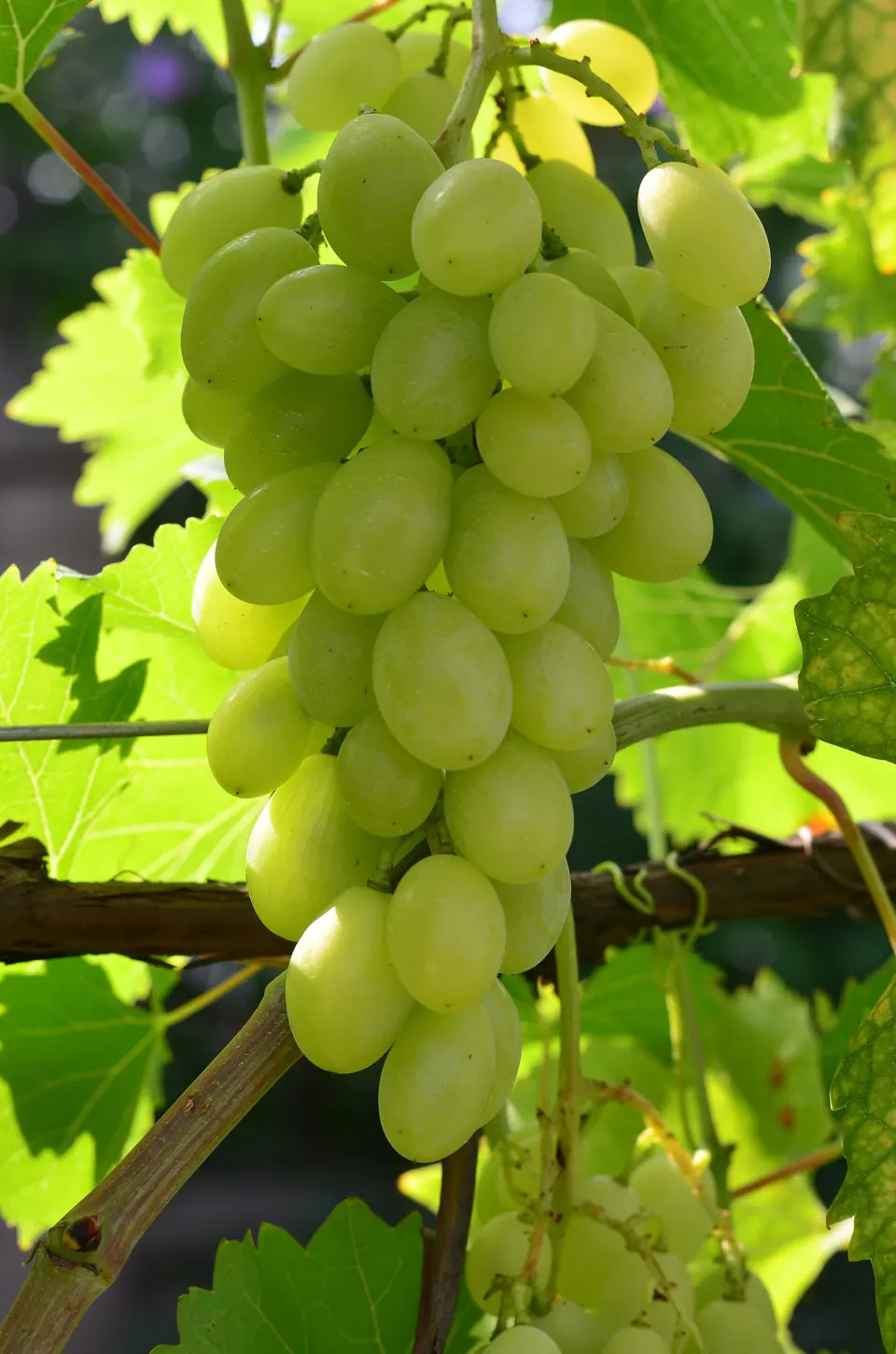
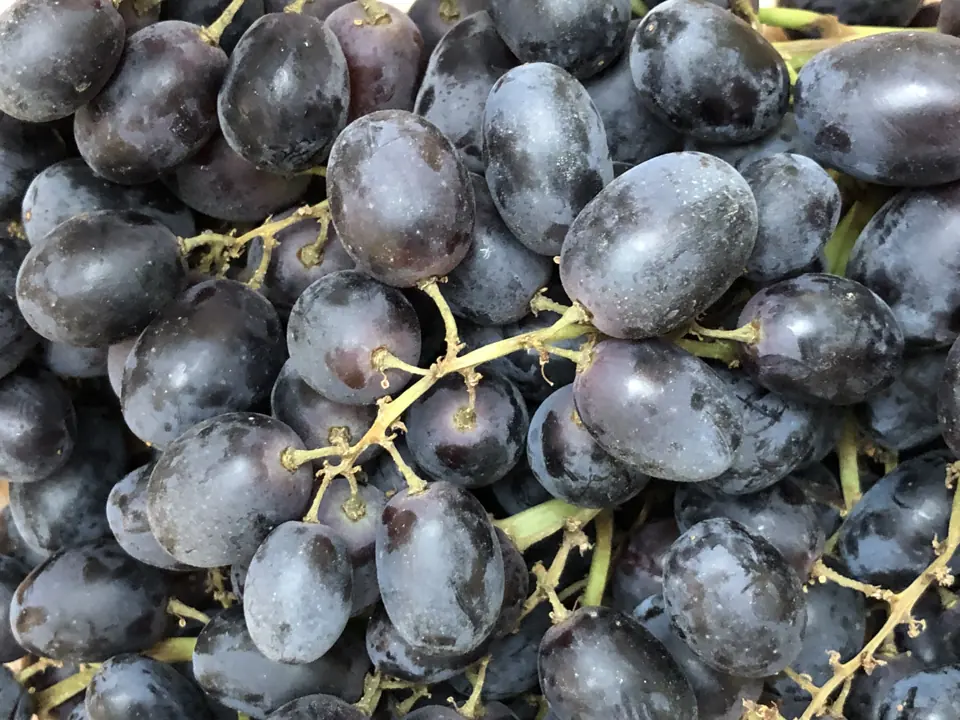
White, red and black, from the southern vineyards that pick while the northern ones rest.
RipeArc supplies table grapes from Peru, South Africa, Chile and Argentina. Together they cover October to May: Peru from October, South Africa from November, Chile and Argentina from December.
- Origins
- Peru, South Africa, Chile, Argentina
- Main months
- October to May
- Colours
- White (green), red, black
- Storage
- −1 to 0 °C, 90–95% humidity




When each origin is in season
| Jan | Feb | Mar | Apr | May | Jun | Jul | Aug | Sep | Oct | Nov | Dec | |
|---|---|---|---|---|---|---|---|---|---|---|---|---|
| Peru RipeArc | Peak | In season | In season | In season | Out of season | Out of season | Out of season | Out of season | Out of season | In season | Peak | Peak |
| Chile RipeArc | In season | In season | In season | Out of season | Out of season | Out of season | Out of season | Out of season | Out of season | Out of season | Out of season | In season |
| South Africa RipeArc | Peak | In season | In season | In season | In season | Out of season | Out of season | Out of season | Out of season | Out of season | In season | In season |
| Argentina RipeArc | Peak | In season | In season | In season | Out of season | Out of season | Out of season | Out of season | Out of season | Out of season | Out of season | In season |
| United States (California) | In season | Out of season | Out of season | Out of season | In season | In season | In season | In season | In season | In season | In season | In season |
| Egypt | Out of season | Out of season | Out of season | Out of season | Out of season | Peak | Out of season | Out of season | Out of season | Out of season | Out of season | Out of season |
| Spain | Out of season | Out of season | Out of season | Out of season | Out of season | Out of season | In season | Peak | Peak | Peak | In season | In season |
| Italy | Out of season | Out of season | Out of season | Out of season | Out of season | Out of season | In season | In season | Peak | Peak | In season | Out of season |
| Greece | Out of season | Out of season | Out of season | Out of season | Out of season | Out of season | Out of season | In season | In season | In season | In season | Out of season |
PeakIn seasonWindows are approximate and move by a few weeks with each season’s weather. Sources are listed at the end of the page.
The four origins
Peru
Peru harvests from October to April, from Piura in the north to Ica in the south, and Piura can crop twice a year. Most exports leave between November and January. The 2025-26 season closed at 86.4 million boxes, 4% more than the year before. White seedless grapes were 62% of exports, red seedless 24%, Red Globe 10% and black seedless 4%. Licensed varieties now cover 85% of the planted area.
South Africa
South Africa packed 81.25 million 4.5 kg cartons for export in 2025-26, from five regions that follow each other from November to May: the Northern Provinces first, then the Orange and Olifants rivers, then the Berg River and finally the Hex River. Europe took 52 million cartons.
Chile
Chile’s harvest starts in Atacama in late November or early December and moves south through Coquimbo to the central valleys, with late varieties packed into March. The 2025-26 season closed at 58.3 million 8.2 kg boxes after rain in March cut about 5 million. The first estimate for 2026-27 is 67.9 million. Licensed varieties are 72% of production.
Argentina
Argentina is a small exporter: 1,500 to 3,100 tonnes a year, mostly to Brazil, Russia and Paraguay. Superior and Cardinal ripen first, and the main harvest in San Juan and Mendoza starts from late January. The first shipment of the 2024-25 season left San Juan on 14 December; export shipments run from December to April.
The varieties
Licensed varieties are replacing the older ones in all three large origins: 85% of Peru’s planted area and 72% of Chile’s production. These are the varieties that matter in our origins. Sugar figures are the breeder’s optimum, not a contract specification.
| Variety | Colour | Eating quality, as the breeder describes it | Where it matters |
|---|---|---|---|
| Sweet Globe | White | Honey-sweet, low acidity, extremely crunchy; 18–24 mm; 18–20 °Brix | Peru’s largest variety (26% of exports); growing in South Africa and Chile |
| Autumncrisp | White | Large, firm, crunchy, mild sweet muscat; late season | Peru’s second variety (21%); largest in South Africa’s Berg River |
| Allison | Red | Medium-large, crisp, sweet neutral flavour; late; good storage | Peru (11%), Chile |
| Sweet Celebration | Red | Bright red, fruity, crisp; 21–23 mm; 18–21 °Brix | South Africa’s fastest-growing red: 8.6 million cartons in 2025-26 |
| Crimson Seedless | Red | Firm and crisp, excellent flavour; berries can run small | Still South Africa’s largest variety (9.2 million cartons) but declining |
| Red Globe | Red, seeded | Very large, round, crunchy, delicate flavour | About 9 million boxes from Chile in 2025-26; 10% of Peru’s exports, down from 48% of its certified area a decade ago |
| Prime | White | Very early; bred at Israel’s Volcani Center | South Africa, 6.5 million cartons |
| Ivory | White | Extra large, crisp, sweet neutral; early; good storage | South Africa (up 21%), Peru (5%) |
| Timpson | White | Large to extra large, mild muscat; stores well | Growing fast in South Africa and Chile |
| Scarlotta Seedless | Red | Large, crisp, juicy; subtle sweetness, low acidity; late | South Africa |
| Cotton Candy | White | Candy-floss and toffee flavour, crisp; 18–22 °Brix | Grown for export, no origin figures published |
| Sweet Sapphire | Black | Tubular berry with a dimpled end, crunchy, sweet neutral | One of Chile’s three largest black varieties |
Quality standards
European buyers mostly ask for Class I. Under the EU marketing standard, Class I berries must be firm, firmly attached and keep their bloom as far as possible, with up to 10% of bunches allowed below class and up to 10% loose berries. The minimum bunch weight is 75 g for Extra and Class I. Seedless grapes must reach at least 14 °Brix, but buyers in practice expect about 16 °Brix, or a sugar:acid ratio of 18:1 to 20:1 below that. How each standard sets sweetness.
Colour matters as much as sugar for red and black grapes. Peru’s national standard asks for 80% of each bunch coloured in red varieties and 90% in black. On arrival, buyers check for shatter (berries falling off the stem), stem browning and drying, grey mould, split berries and bleaching from SO2 pads.
Storage and shelf life
Keep table grapes at −1 to 0 °C and 90–95% relative humidity, with the pulp at −0.5 to 0 °C throughout. Cooling and SO2 treatment should start within 12 hours of harvest, and on sea voyages longer than 10 days the boxes carry SO2 pads with a liner to control grey mould. Grapes are not sensitive to chilling or ethylene. Well-handled Thompson and Flame Seedless are marketed up to 8 to 10 weeks after harvest; shelf life depends on the variety and on temperature control.
Market access by destination
Each importing country sets its own conditions for each origin. This is what applies to our four origins.
| Destination | Peru | Chile | South Africa | Argentina |
|---|---|---|---|---|
| EU and UK | Allowed | Allowed | Allowed | Allowed |
| United States | Cold treatment | Methyl bromide | Cold treatment, or irradiation under preclearance | Methyl bromide plus cold treatment |
| China | Not verified | Not verified | Not verified | Protocol: cold treatment, 16 days at 1 °C or 21 days at 2.1 °C |
| Israel | Cold treatment in transit, 15 or 17 days | Not permitted | Orange, Berg and Hex River only; 22 days at −0.55 °C | Not permitted |
“Not verified” means the official text could not be opened; it does not mean the route is closed. Each treatment is stated on the phytosanitary certificate. Full Israeli conditions: Importing into Israel.
- Peru: USDA FAS GAIN PE2025-0027, 2 December 2025; FreshFruitPortal reporting Provid, 14 August 2026; AgroPerú citing Provid, 29 April 2026.
- South Africa: SATI, Statistics of Table Grapes in South Africa 2026; SATI regions.
- Chile: Portal Frutícola reporting Frutas de Chile, 28 September 2026; USDA FAS GAIN CI2025-0028, 2 December 2025.
- Argentina: SENASA, 2021; Agroempresario citing INTA, 2 March 2026; UN Comtrade, Argentina exports HS 0806.10, 2023–2025.
- Varieties: IFG / Bloom Fresh; Sun World; Australian Table Grape Association; US plant patents PP20491, PP23125, PP14088, PP19912, PP23399; FreshPlaza on the Volcani programme, 27 June 2022.
- Quality: EU Regulation 543/2011, table grapes; CBI, table grapes market entry, 2025; INDECOPI, NTP 011.012, 2005.
- Storage and defects: USDA, Agriculture Handbook 66, table grape chapter, 2016.
- Market access: USDA APHIS ACIR import requirements, read 1 October 2026; Argentina–China table grape protocol; Israel: PPIS, list of fresh produce permitted for import, 10 June 2026; PPIS notice to importers 9-2025, 20 August 2025; PPIS–South Africa arrangement for table grapes, revision October 2006; FreshPlaza quoting Israel’s Ministry of Agriculture, 24 May 2022.