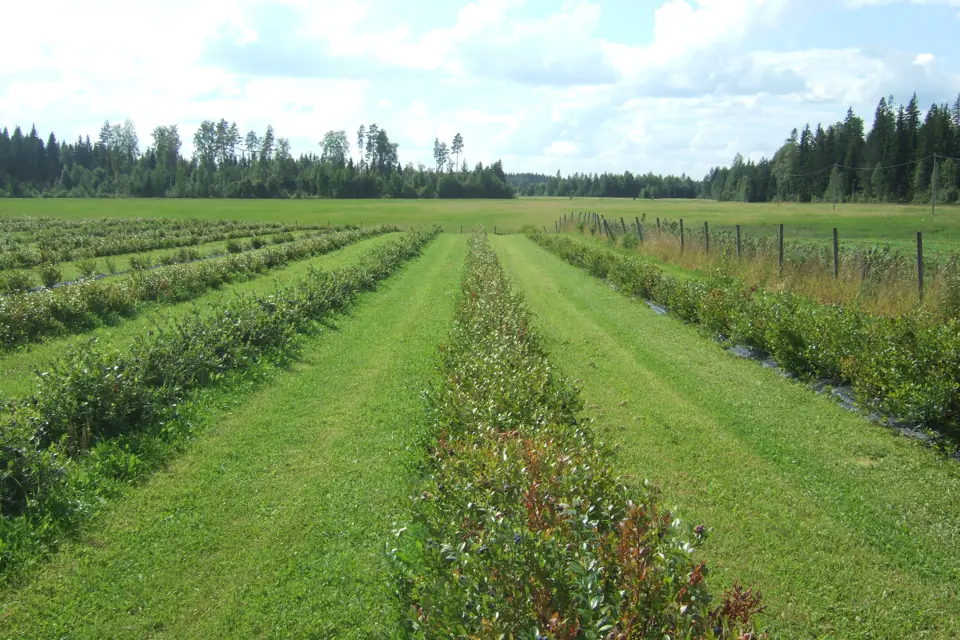
Photo: Matthew Henry, CC0

The fruit
Fresh blueberries
Four southern origins, so the supply runs from late summer into the southern spring and summer.
RipeArc supplies fresh blueberries from Peru, Chile, Argentina and South Africa. Peru is the largest exporter and ships mainly from August to December. Argentina covers August to November, South Africa May to December, and Chile December to February.
- Origins
- Peru, Chile, Argentina, South Africa
- Main months
- August to February
- Quality class
- Class I (UNECE FFV-57)
- Storage
- −0.5 to 0 °C, above 90% humidity




When each origin is in season
| Jan | Feb | Mar | Apr | May | Jun | Jul | Aug | Sep | Oct | Nov | Dec | |
|---|---|---|---|---|---|---|---|---|---|---|---|---|
| Peru RipeArc | Out of season | Out of season | Out of season | Out of season | In season | In season | In season | In season | In season | Peak | In season | In season |
| Chile RipeArc | Peak | In season | Out of season | Out of season | Out of season | Out of season | Out of season | Out of season | In season | In season | In season | Peak |
| Argentina RipeArc | Out of season | Out of season | Out of season | Out of season | Out of season | Out of season | Out of season | In season | In season | In season | Peak | Out of season |
| South Africa RipeArc | Out of season | Out of season | Out of season | Out of season | In season | In season | In season | In season | In season | Peak | Peak | In season |
| Spain | Out of season | In season | In season | Peak | Peak | In season | Out of season | Out of season | Out of season | Out of season | Out of season | Out of season |
| Poland | Out of season | Out of season | Out of season | Out of season | Out of season | Out of season | In season | Peak | In season | Out of season | Out of season | Out of season |
PeakIn seasonWindows are approximate and move by a few weeks with each season’s weather. Sources are listed at the end of the page.
The four origins
Peru
Peru exported about 383,000 tonnes of fresh blueberries in the 2025-26 season, a record and 20% more than the year before. Half came from La Libertad and a quarter from Lambayeque; Ica grew 46% on the year before. 96% travelled by sea. The 2026-27 forecast is lower, about 344,000 tonnes, after weather cut the crop.
More than 65 varieties are grown, but five made up two thirds of exports in 2025-26: Ventura, Sekoya Pop, Biloxi, Mágica and Rocío.
Chile
Chile exported 92,000 tonnes of fresh blueberries in 2025-26, from late August to mid-February, with the heaviest weeks from early December to mid-January. Maule, Ñuble and Biobío supply three quarters of the volume. Legacy is still the largest variety, followed by Duke, Brightwell, Blue Ribbon and Suzie Blue. Newer varieties made up 24% of exports and are forecast to reach 32% in 2026-27.
Argentina
Argentina is a small, early exporter: about 4,800 tonnes in the season that closed in December 2025, about 90% by air and about 80% organic-certified. The north-west (Tucumán, Salta) picks first, from August, then Entre Ríos and Corrientes, then Buenos Aires into December.
South Africa
South Africa exported 25,584 tonnes in the year to August 2026. The northern provinces harvest from May to September, and the Western Cape, about 60% of production, from October to January. Around 80% of exports go to Europe and the UK.
The varieties
Blueberries are not sold by variety on the shelf, but the variety decides size, firmness and how well the fruit travels. These are the ones that dominate exports from our origins.
| Variety | Type | Fruit, as the breeder describes it | Where it matters |
|---|---|---|---|
| Ventura | Low chill (Fall Creek) | Large, firm, medium blue | Peru’s largest export variety: 95 million kg in 2025-26, 44% of Peru’s shipments to Europe |
| Sekoya Pop | Low chill (Fall Creek) | Crunchy texture, long shelf life | Peru’s second export variety; first by planted area in one 2026 count, and growing |
| Biloxi | Zero chill, public variety | Small to medium, balanced sweetness and acidity | Once 60% of Peru’s area, now about 13%; firmness and shelf life limit long journeys |
| Mágica | OZblu (Australia) | No breeder sheet published | Peru’s fourth variety, 11% of its UK shipments |
| Rocío | Warm-climate (Hortifrut licence) | 18–23 mm, 11–12.5 °Brix, “jumbo fruit variety in Peru” | Peru, July to January |
| Emerald | Southern highbush (University of Florida) | Very large, firm, mild; 18 mm | Peru and Argentina |
| Legacy | Mid chill, public variety | Medium, light blue, excellent flavour | Chile’s largest variety; also Argentina |
| Duke | Northern highbush | Large, light blue, firm, mild | Chile’s second variety |
| Blue Ribbon | Mid chill (Fall Creek) | Large, very firm, sweet, good shelf life | Chile and Argentina |
Quality and size
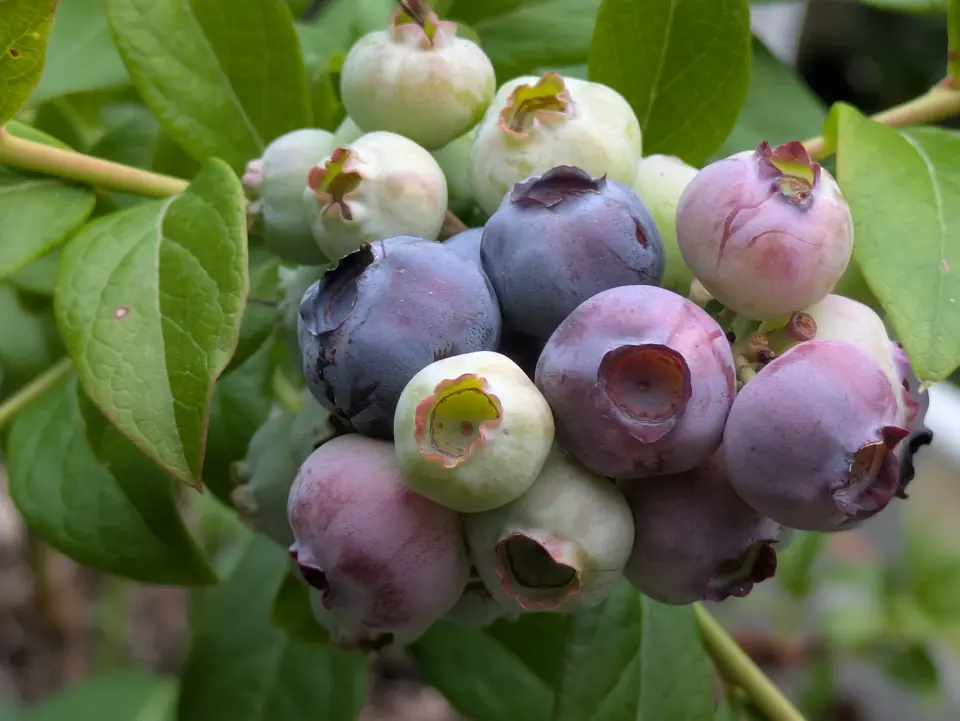
Blueberries are traded under the UNECE standard for berry fruits (FFV-57), and European buyers almost always ask for Class I. In Class I the berries must be intact, clean and practically covered with bloom, the natural waxy coating, with no more than 10% of fruit below class and 2% decayed or below the minimum requirements. Unripe berries are not allowed in any class: blueberries do not ripen after picking.
There is no international size standard. Buyers set their own grading, and size is the first thing to agree. In Peru, newer varieties such as Sekoya Pop are moving production towards berries above 18 or 20 mm. For sweetness, research uses soluble solids above 10% and acidity between 0.3% and 1.3% as a benchmark. How sweetness is specified.
Storage and shelf life
Keep blueberries at −0.5 to 0 °C and above 90% relative humidity. In those conditions highbush blueberries keep for up to two weeks. Controlled atmosphere (10–15% CO2, 1–10% O2) kept firmness and acidity, reduced decay and gave up to six weeks in trials. Rough handling shortens storage life, and machine-harvested fruit can keep half as long as hand-picked. Retail display should stay as close to 0 °C as possible.
Market access by destination
Each importing country sets its own conditions for each origin. This is what applies to our four origins.
| Destination | Peru | Chile | South Africa | Argentina |
|---|---|---|---|---|
| EU and UK | Allowed | Allowed | Allowed | Allowed |
| United States | Cold treatment, methyl bromide, or irradiation on arrival | Systems approach in regions VIII and XVI; elsewhere methyl bromide | Cold treatment or methyl bromide | Cold treatment or methyl bromide |
| China | Protocol: cold treatment, 15 days at 1.11 °C, 17 at 1.67 °C or 22 below 2 °C | Not verified | Not approved (draft protocol) | Allowed since 2018 |
| Israel | Cold treatment, 15 or 17 days | Methyl bromide before dispatch | Not permitted | Methyl bromide before dispatch |
“Not verified” means the official text could not be opened; it does not mean the route is closed. Each treatment is stated on the phytosanitary certificate. Full Israeli conditions: Importing into Israel.
- Peru: Italian Berry citing Proarándanos, 11 May 2026; FreshPlaza citing Proarándanos, 7 May 2026; Portal Frutícola, 15 October 2026; FreshPlaza, 26 May 2026.
- Chile: Chilean Blueberry Committee crop report, February 2026; FreshPlaza citing iQonsulting, 12 October 2026.
- Argentina: Portal Frutícola quoting the Argentine Blueberry Committee, 20 January 2026; Elonce citing SENASA, 29 January 2026.
- South Africa: USDA FAS GAIN report SF2026-0027, South African Blueberry Market Analysis, 12 August 2026.
- Varieties: Fall Creek variety pages; UF/IFAS EDIS HS1245; Hortifrut, Rocío; Italian Berry, 3 December 2024 and 16 December 2025.
- Quality: OECD, Berry Fruits (UNECE FFV-57), 2024; CBI, blueberries market entry, 23 April 2025.
- Storage: USDA, Agriculture Handbook 66, blueberry chapter, 2016.
- Market access: USDA APHIS ACIR import requirements, read 1 October 2026; Peru–China blueberry protocol; Israel: PPIS, list of fresh produce permitted for import, 10 June 2026; PPIS import conditions, “Vaccinium, fresh fruits for consumption” from Peru, Chile and Argentina, as published on 5 August 2026; UN Comtrade, Israel imports, HS 0810.40, 2023–2025.