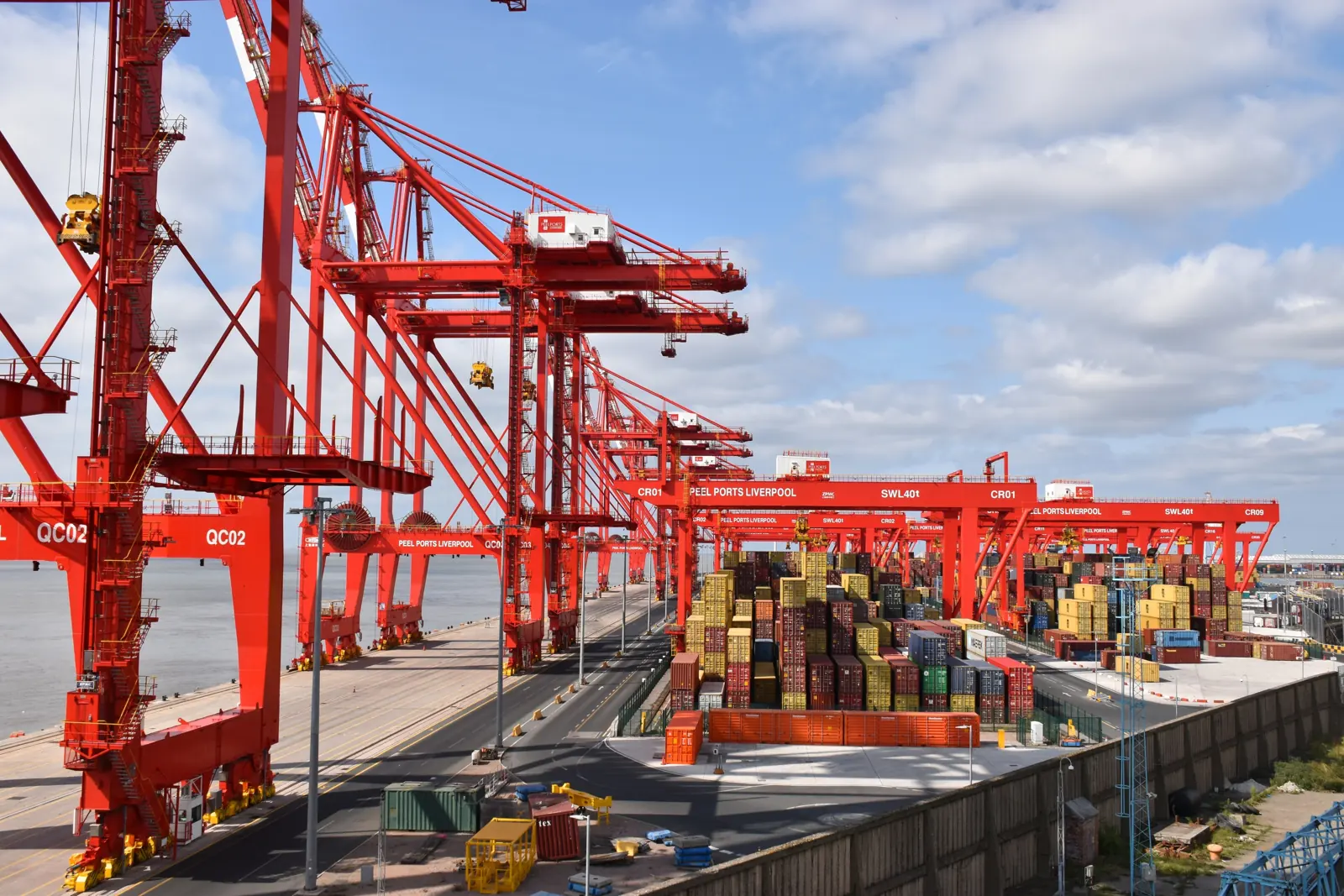
Photo: Niels Johannes, CC BY-SA 4.0

Importing grapes, blueberries, raspberries and pineapples into Israel
Which origins are allowed, what each one must do before it ships, and what happens at Ashdod or Haifa. From the Ministry of Agriculture’s own lists and conditions.
Israel allows table grapes from Peru and South Africa, and blueberries from Peru, Chile, Argentina, Spain, Poland, Portugal, Ukraine, Uruguay and Georgia. From Peru, Chile, Argentina and South Africa, each approved route needs an import licence from the Plant Protection and Inspection Services (PPIS), a phytosanitary certificate, the treatment set for that origin, and release at the port by both PPIS and the Ministry of Health. Fresh raspberries are admitted only from a defined list of European countries, without a licence; pineapples only from Costa Rica, Kenya and the Dominican Republic, each under licence.
Which origins are allowed
| Origin | Table grapes | Blueberries |
|---|---|---|
| Peru | Allowed since August 2025 | Allowed since 2022 |
| South Africa | Allowed: Orange, Berg and Hex River valleys only | Not on the list |
| Chile | Not on the list | Allowed |
| Argentina | Not on the list | Allowed |
| Fruit | Allowed origins | Licence |
|---|---|---|
| Raspberries | “European countries” as the Plant Protection Regulations define them: Austria, Italy, Ireland, Belgium, the United Kingdom, Germany, Denmark, the Netherlands, Luxembourg, Norway, Spain, Portugal, Finland, Northern Ireland, France, Sweden and Switzerland. Morocco, Mexico, Peru, Chile and Serbia are not on the list. | Not required |
| Pineapples | Costa Rica (approved growers and packhouses, outside the Limón region), Kenya and the Dominican Republic (approved growers, packhouses and fumigation companies) | Required |
PPIS’s list of permitted fresh produce says that anything not on the list or in the Yeela import system is not approved. A new origin needs a pest risk analysis first. The list is updated with each new approval, so check it before planning a programme.
Licence first, then a release for each shipment
- Import licence. The importer applies in Yeela, the Ministry of Agriculture’s online import system. The licence lists the conditions the fruit must meet.
- Release request, per consignment. The importer enters the goods and attaches the phytosanitary certificate, the bill of lading and the invoice or packing list. PPIS checks the documents and inspects the fruit at the port.
- Ministry of Health. For fresh fruit, customs also requires the Ministry of Health National Food Service approval and release from its quarantine station. The importer must be registered with the Food Service.
The phytosanitary certificate
- An original certificate from the origin’s plant protection authority, on the international (IPPC) model, stamped and signed.
- For fresh fruit, the inspection behind it must be no more than 14 days before dispatch.
- If it is not in English, an official Hebrew or English translation goes with it.
- If the fruit is shipped through a third country, a re-export certificate from that country is needed too.
- The certificate states the treatment applied and any additional declarations the conditions require.
Treatments by origin
| Fruit and origin | Treatment |
|---|---|
| Grapes, Peru | Cold treatment in transit: 1.11 °C or below for 15 days, or 1.67 °C or below for 17 days |
| Grapes, South Africa | Cold treatment in transit: −0.55 °C or below for at least 22 days; shipped from Cape Town or Durban |
| Blueberries, Peru | Cold treatment against Anastrepha fraterculus: 1.11 °C or below for 15 days, or 1.67 °C or below for 17 days |
| Blueberries, Chile and Argentina | Methyl bromide before dispatch: 32 g/m³ for 3.5 hours at 15.5 °C or above |
| Blueberries, Spain and Poland | No treatment |
| Raspberries, European countries | No treatment. The certificate declares that the orchard is free from Colletotrichum acutatum, Erwinia amylovora, Popillia japonica and Lygus lineolaris, and that the fruit was inspected and found free from seven named pests, among them Byturus tomentosus. The consignment must be free of leaves and plant residues. |
| Pineapples, Costa Rica | No fumigation. Washed and disinfected in chlorinated water; inspected free of quarantine pests and of gummosis |
| Pineapples, Kenya and the Dominican Republic | Methyl bromide before dispatch: 40 g/m³ for 2 hours at 16–20 °C, or 32 g/m³ for 2 hours at 21 °C or above, by an approved fumigation company; container and seal numbers on the certificate. Dominican plantations must be free from Phytophthora palmivora. |
Grapes from Peru must come from vineyards and packhouses approved for Israel, and the container and seal numbers go on the certificate. South African grapes must come from vineyards approved by South Africa’s Directorate of Plant Health, are inspected at the packhouse and again at the port, and travel in new cartons on ISPM 15 pallets.
Marking
- Peruvian grapes: each crate shows the country of origin, botanical name, vineyard and packhouse name or code, variety and quantity.
- Blueberries: each package shows the country of origin, botanical name and quantity.
- Pineapples: de-crowned, with no more than three whorls of leaves and a leafless stem of 5 cm or less; varieties over 50% Smooth Cayenne; each package marked with variety, packhouse, grower and field.
- Every origin: new packing material, and each pallet labelled “Approved for Israel”.
- In the shop: retailers must show the country of origin of loose fresh produce on a sign next to the price, and online as well since 24 February 2024.
At the port
A consignment may not enter Israel, be moved or be opened until a PPIS inspector has inspected and approved it in writing. If it does not comply or carries pests, the inspector can order it destroyed, treated, tested in an official laboratory, moved to post-entry quarantine or sent out of Israel, at the importer’s cost.
Pesticide residues
Israel’s Ministry of Health has adopted the EU’s maximum residue levels (Regulation 396/2005), and refers importers to the EU pesticide database. The PPIS conditions for South African grapes accept residues that meet the Israeli limits or the Codex limits. Plan to the EU limits.
Duty
- Blueberries (tariff 0810.40), raspberries (0810.20) and pineapples (0804.30.10): duty-free since 16 March 2022, with no purchase tax.
- Fresh grapes (tariff 0806.10): the 2026 general rate is listed as 0.95 ILS per kg, or 1.68 ILS per kg for grapes released in April and May, with a further percentage term in the tariff line. Confirm the full rate with a customs broker.
- No preferential rate is listed for Peru, Chile, South Africa or Argentina. There is no quota on the general rate and no purchase tax.
Kashrut
The Chief Rabbinate does not certify imported products itself. It approves imports on the basis of certification by foreign kashrut bodies that it recognises, and kosher imports carry a fixed label: “כשר באישור הרבנות הראשית לישראל בהשגחת” followed by the certifying body. An importer who wants to sell fruit as kosher needs that certification and the approval of the Rabbinate’s import department.
Before the first shipment
- Confirm the origin is on the current PPIS list for that fruit.
- Get the import licence in Yeela and read its conditions in full.
- Check that the farm and packhouse are approved for Israel where the conditions require it.
- Agree with the exporter who applies the treatment, and how it appears on the certificate.
- Register with the Ministry of Health Food Service and use a customs broker for the release.
- PPIS, list of fresh produce permitted for import, 10 June 2026; Yeela import route search, accessed 27 October 2026.
- Ministry of Agriculture, import licence for agricultural produce; import of grapes from Peru, 10 August 2025; PPIS notice to importers 9-2025, 20 August 2025.
- PPIS, Plant Import Regulations 2009 (unofficial English translation), regulations 5–8.
- PPIS, Detailed Conditions for Import of Table Grapes from the Republic of South Africa, version 2.05, 28 December 2025; PPIS–South Africa arrangement, revision October 2006.
- PPIS import conditions for Vaccinium from Peru, Chile, Argentina, Spain and Poland, as published on 5 August 2026; Yeela import conditions for Rubus idaeus (European countries) and Ananas comosus (Costa Rica, Kenya, Dominican Republic), read 29 October 2026; PPIS list of 10 June 2026, rows 38–40 and 129.
- Ministry of Health, adoption of EU food regulation, updated 15 October 2026.
- Israel Tax Authority customs tariff, items 0806.10.10.00, 0810.40.00.00, 0810.20.00.00 and 0804.30.10.00, as of 29 October 2026.
- Ministry of Agriculture, country of origin marking, 13 December 2023; Chief Rabbinate, kashrut of imported food.