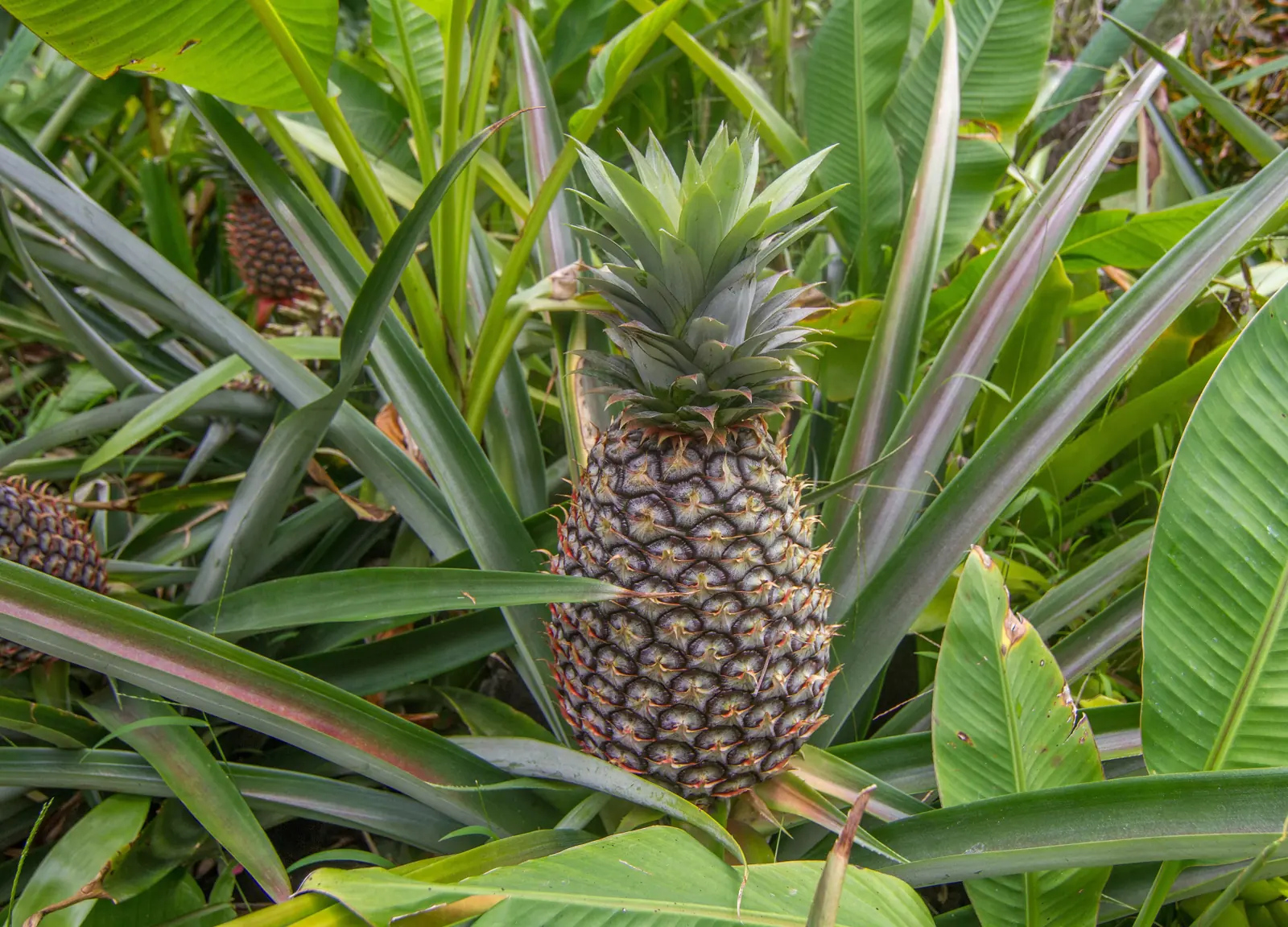
Photo: Maksym Kozlenko, CC BY-SA 4.0

The fruit
Pineapples
Harvested ripe, because a pineapple never ripens after picking, and shipped every month of the year.
RipeArc supplies fresh pineapples from Costa Rica, Kenya and the Dominican Republic. Costa Rica ships every month of the year and grows about 60% of the world’s export supply; Kenya is the largest supplier to Saudi Arabia and sells into Europe; the Dominican Republic is an air-freight origin for Europe.
- Origins
- Costa Rica, Kenya, Dominican Republic
- Supply
- Every month; European demand peaks at Easter and Christmas
- Varieties
- MD2 (Extra Sweet), Smooth Cayenne, Queen Victoria, Sugarloaf
- Storage
- 7–12 °C, 85–95% humidity; never below 7 °C




Supply through the year
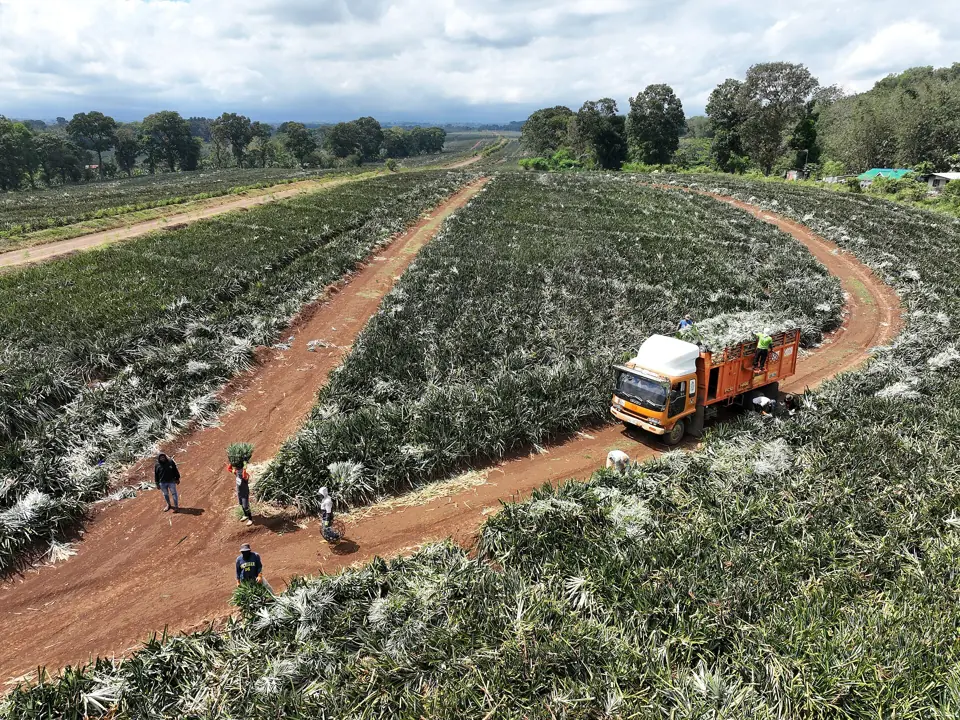
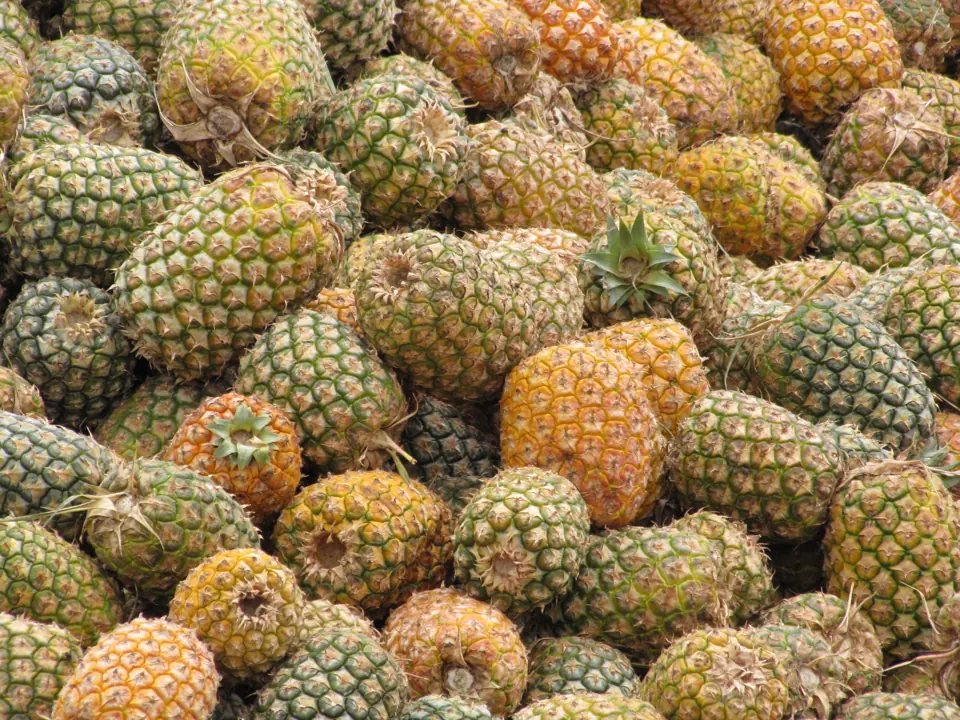
Pineapple is not a seasonal crop. World exports were 3.56 million tonnes in 2024 and about 3.38 million in 2025, and the United States, the EU and China are the three largest import markets. Costa Rica’s shipments barely move from month to month; Europe’s imports are highest in December.
| Jan | Feb | Mar | Apr | May | Jun | Jul | Aug | Sep | Oct | Nov | Dec | |
|---|---|---|---|---|---|---|---|---|---|---|---|---|
| Costa Rica | In season | In season | In season | In season | In season | In season | In season | In season | In season | In season | In season | In season |
| Kenya | In season | In season | In season | In season | In season | In season | In season | In season | In season | In season | In season | In season |
| Dominican Republic | In season | In season | In season | In season | In season | In season | In season | In season | In season | In season | In season | In season |
PeakIn seasonWindows are approximate and move by a few weeks with each season’s weather. Sources are listed at the end of the page.
Costa Rica’s year-round bar comes from monthly import data. For Kenya and the Dominican Republic we show year-round supply, as pineapple is cropped through the year, but we have not verified their monthly volumes.
The three origins
Costa Rica
Costa Rica exported 2.4 million tonnes in 2024 and about 2.02 million in 2025, after bad weather delayed planting and raised pest pressure. It supplied about 89% of US pineapple imports (1,183 of 1,323 thousand tonnes) and 89% of the EU’s imports from outside the EU (714 of 801 thousand tonnes) in 2024. Pineapples were worth USD 1,214 million in the first eleven months of 2025, the country’s second export after medical devices. Monthly shipments to the United States stayed between 91 and 107 thousand tonnes through 2024; CBI puts the start of peak supply in May. About 1 to 1.5% of the crop is organic.
Kenya
Kenya exported 44,400 tonnes worth USD 31 million in 2024. It is Saudi Arabia’s largest supplier, with 12,300 of the 21,600 tonnes Saudi Arabia imported that year, and it sold more than EUR 5.5 million of pineapples to Europe in 2020-21. CBI lists Kenya among the suppliers growing in importance for Europe.
Dominican Republic
A small exporter, 1,200 tonnes in 2024, that CBI names with Panama as a popular air-freight origin for Europe. For Israel it is one of three admitted origins.
The varieties
Smooth Cayenne dominated production and trade until the mid-1990s, when Del Monte introduced the MD2 hybrid, developed in Hawaii and first grown commercially in Costa Rica. As planting material spread, MD2 changed the nature of the pineapple trade. The ideal sugar readings below are CBI’s, for fruit at its best, not a contract specification.
| Variety | Ideal Brix | Fruit | How it travels | Where it comes from |
|---|---|---|---|---|
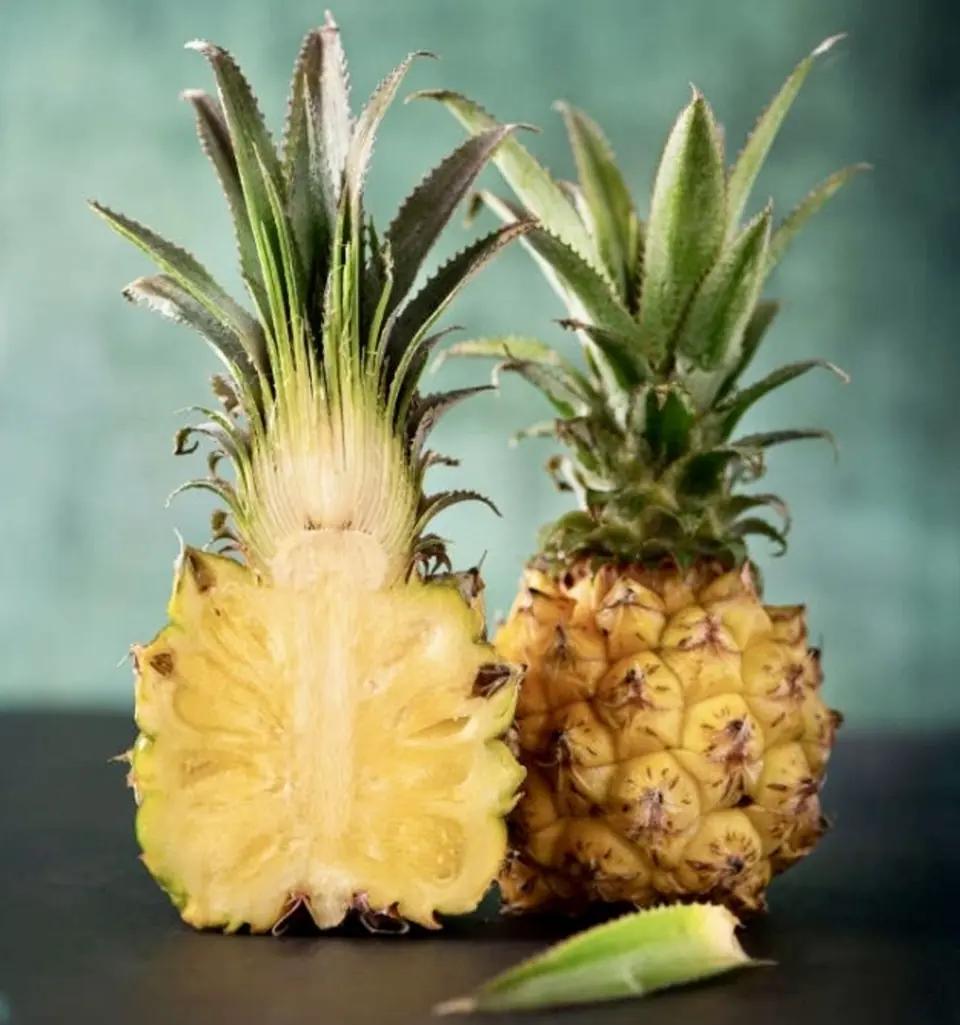
| MD2, sold as Extra Sweet | 14.5–16.5% | Cylindrical; flat eyes; yellow to dark-yellow flesh, very low acidity; thicker skin that stands up to shocks; crown usually spineless | Sea | Costa Rica, Ecuador, Panama, Honduras, Ghana, Côte d’Ivoire; over 80% of European imports |
| Smooth Cayenne | 12.8–14% | Pale-yellow flesh; mixed acid and sugar taste; ripens from the base, so the base is sweeter than the top | Sea or air | Historically the main cultivar; Côte d’Ivoire’s growers moved it to air freight when sea-freighted MD2 took the market |
| Queen Victoria | 13.5–16% | Small, 600–800 g, with prominent eyes and a spiny crown; yellow flesh | Air only | Mauritius, Réunion, South Africa; popular at Christmas and Easter |
| Sugarloaf | 13.5–15% | Bottle-shaped; white to pale-yellow flesh; spineless crown; shell colour varies by origin | Air only | Benin, Ghana, Togo, Cameroon |
Quality standards
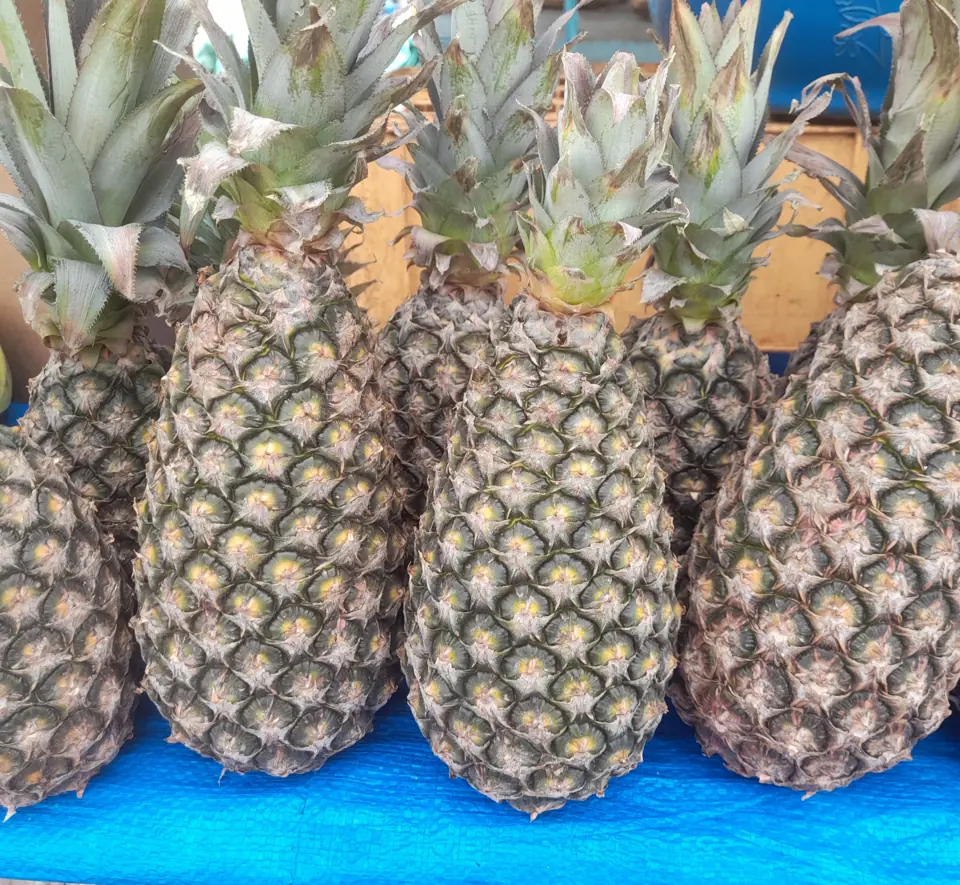
The Codex standard for pineapples (CXS 182-1993) sets three classes, Extra, Class I and Class II, and a minimum of 12 °Brix in the flesh, measured on a juice sample representing all the fruit. Fruit must be physiologically ripe: not opaque, flavourless and porous, and not exceedingly translucent or fermented. Skin defects may cover at most 4% of the surface in Class I and 8% in Class II; the crown, if present, must be fresh and 50 to 150% of the fruit’s length in Extra and Class I; the stalk is cut at no more than 2 cm. Size runs by average weight in eight codes, from A at 2,750 g with crown down to H at 800 g, each ±12%, with a 700 g minimum except for small varieties such as Victoria and Queen at 250 g. Tolerances are 5% for Extra and 10% for Classes I and II. The EU has no pineapple-specific marketing standard, so the general standard applies, and the UNECE standard FFV-49 covers the same ground.
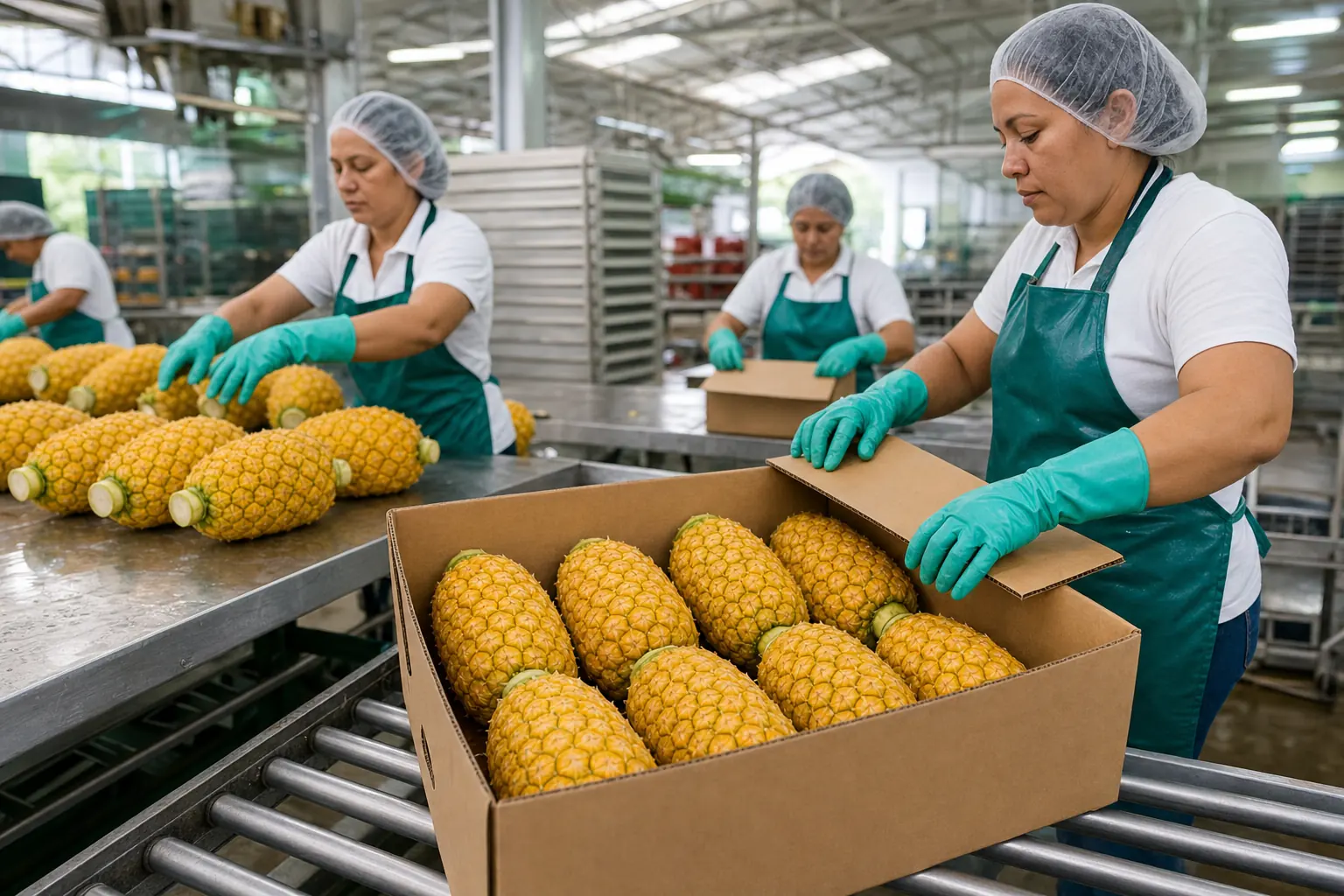
In trade, pineapples are packed and sold by count. The standard box is 12 kg gross, about 11.5 kg net, holding 5 to 10 fruit; sizes 6 to 8 are the most wanted and supermarkets prefer 7 and 8. Crownless fruit, about 20 to 25% of the market, fits more fruit per box and usually earns a higher box price. European buyers target 13 to 17 °Brix, higher for air-freighted fruit, and expect uniform origin, variety, quality, size and Brix within each box, often with a label on every fruit. Shell colour is graded on charts, C0 (all green) to C4 for Smooth Cayenne and C0 to C6 for MD2; C0 to C2 is recommended for sea shipment, C3 and C4 for air. High shell colour is not a reliable sign of sweetness, and flesh more than 50% translucent means a short shelf life. Immature fruit should not be shipped: it has low Brix, never develops flavour and is prone to chilling injury. Common certifications are GLOBALG.A.P. on the farm, BRCGS, IFS or FSSC 22000 in the packhouse, SMETA, and increasingly Rainforest Alliance and Fairtrade. The EU residue limit for ethephon, used to even out shell colour, is 2.0 mg/kg; it is banned in organic production.
Storage, ripening and shelf life
A pineapple is non-climacteric: it does not ripen or sweeten after harvest, so it must be picked ripe. Fruit for sea freight is cut as soon as it is ripe, to travel at least 14 days; fruit for air freight as late as possible. Hold it at 7 to 12 °C and 85–95% humidity: fruit at colour break keeps 14 to 20 days, ripe fruit about 7 to 10 days at 7 °C. Reefers run at 10 to 12 °C for mature green fruit and 7 to 10 °C for turning fruit. Never go below 7 °C: at 0 to 4 °C the fruit looks fine in the cold room, then shows chilling injury within two or three days of warming up: dull or browning skin, crown leaves that wilt, and internal browning of the flesh. Display whole fruit at 10 to 13 °C, not misted or iced. The main rot, black rot, enters through the cut stem within 8 to 12 hours of harvest, so stems are cut clean and fruit is kept cool; Costa Rican fruit is dipped in a wax emulsion with a fungicide to extend its life.
Sea and air
Pineapples reach Europe mainly by sea, usually on the same ships as bananas, and MD2 is generally available only by sea. Costa Rica’s port of Moín is 12 days from Antwerp on a direct service, and about 13, 14 and 16 days from the United Kingdom, the Netherlands and Belgium on the weekly Caribbean service; those timings were published in 2019 and 2021 and we have not checked the current schedules. Sugarloaf and Queen Victoria fly, and air-freighted fruit can be picked riper, at 15 °Brix and above.
Market access by destination
Each importing country sets its own conditions for each origin. This is what applies to our three origins.
| Destination | Costa Rica | Kenya | Dominican Republic |
|---|---|---|---|
| EU | No phytosanitary certificate; 0% duty | No phytosanitary certificate; 5.8% third-country duty (preferences not checked) | No phytosanitary certificate; 5.8% third-country duty (preferences not checked) |
| United Kingdom | No phytosanitary measure listed; 0% duty for all origins until 31 December 2028 | ||
| United States | All ports except Hawaii; permit and inspection | All ports except Hawaii; permit and inspection | All ports except Hawaii; permit and inspection |
| China | Not verified | Not verified | Not verified |
| Israel | Import licence; approved growers and packhouses; outside the Limón region; de-crowned; over 50% Smooth Cayenne; washed in chlorinated water; no fumigation | Import licence; approved growers, packhouses and fumigators; methyl bromide before dispatch; de-crowned; over 50% Smooth Cayenne | As Kenya, plus a plantation free from Phytophthora palmivora |
“Not verified” means the official text could not be opened; it does not mean the route is closed. Israel admits pineapples from these three origins only, duty-free. Full Israeli conditions: Importing into Israel.
- World and Costa Rica: FreshPlaza citing FAO preliminary results 2025, 3 February 2026; Estrategia & Negocios citing PROCOMER, 29 December 2025; UN Comtrade, HS 080430, US and EU imports 2024 by month and partner, accessed 29 October 2026; CBI, pineapples market entry and market potential, 10 October 2022.
- Kenya and the Dominican Republic: UN Comtrade, HS 080430, 2024 export declarations and Saudi Arabia’s 2024 imports, accessed 29 October 2026; CBI market entry and market potential, 2022.
- Varieties: CBI, Product characteristics for fresh pineapples, 2014; CBI market potential, 2022; TFNet, 10 May 2016.
- Standards and specs: Codex CXS 182-1993, amended 2011; European Commission on marketing standards; CBI market entry, 2022, and product characteristics, 2014.
- Storage: USDA, Agriculture Handbook 66, pineapple chapter, 2016; CBI, 2014 and 2022.
- Transit: FreshPlaza on MSC’s Moín–Antwerp service, 26 August 2019; APM Terminals Moín, 18 November 2021.
- Market access: EUR-Lex, Regulation (EU) 2019/2072 consolidated 15 October 2026; EU TARIC and UK Trade Tariff, 29 October 2026; USDA APHIS ACIR, pineapple documents for Costa Rica (10 April 2026) and certain admissible countries (27 December 2023); Israel: PPIS, list of fresh produce permitted for import, 10 June 2026, and Yeela import conditions for Ananas comosus, read 29 October 2026.