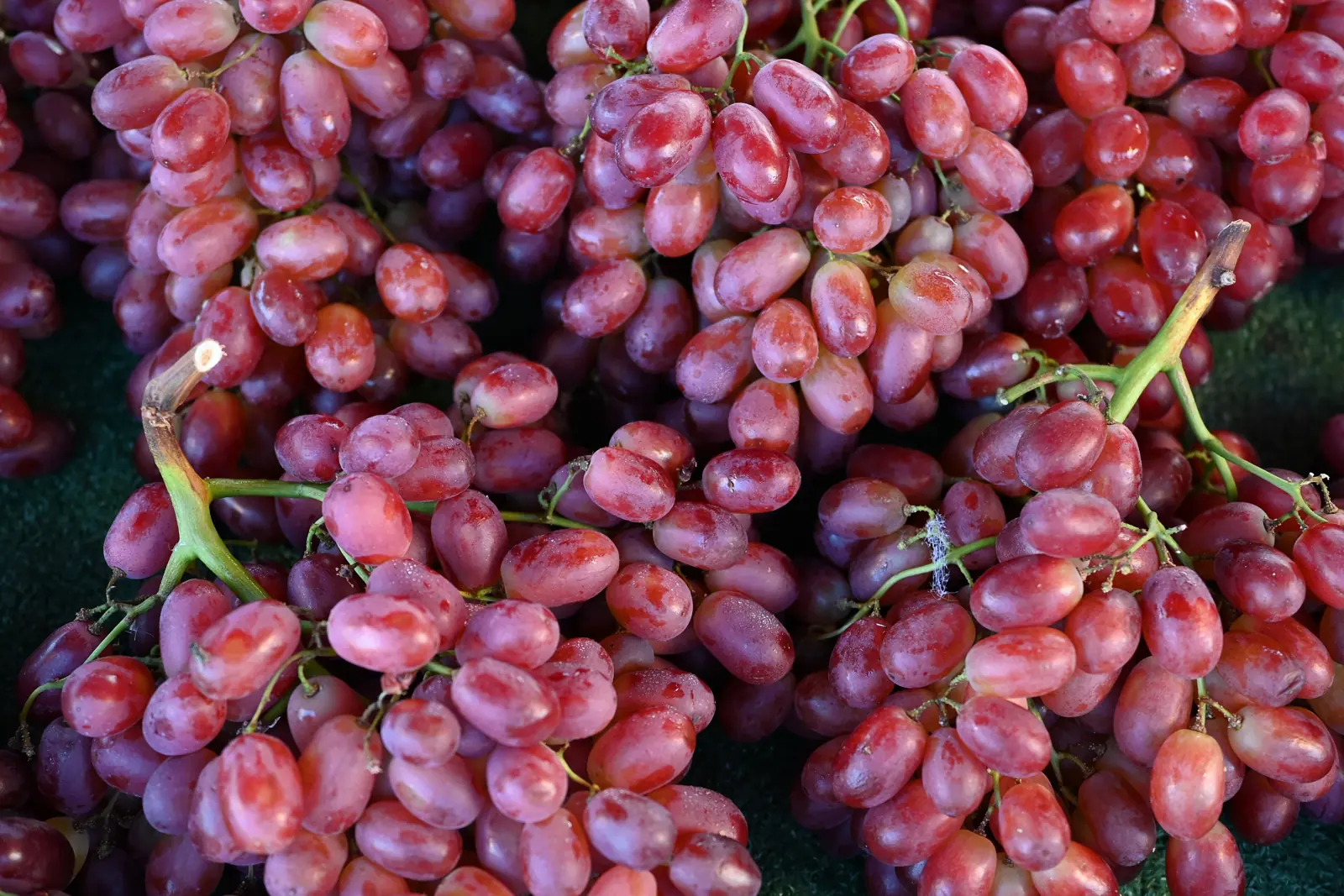
Photo: PattayaPatrol, CC BY-SA 4.0

Brix, acid and ratio: how sweetness is specified
A grape can read 16 °Brix and still taste sour. Here is what the numbers mean, what each standard asks for, and which one to name in a contract.
°Brix measures sugar in the juice. Titratable acidity measures sourness. For table grapes, the ratio of the two predicts how much people like the fruit better than Brix alone. Standards disagree on the minimum, so a contract should name the standard and the number.
What °Brix is, and how it is read
°Brix is a refractometer scale: the percentage by mass of sucrose in a solution at 20 °C. In trade documents it appears as “total soluble solids” (TSS) or “soluble solids content” (SSC). All three mean the same reading.
The reading is only as good as the sample. South Africa’s grape regulation takes at least 1 kg of berries from the least ripe bunches, presses and strains the juice, and averages two refractometer readings. Peru’s national standard takes the two least mature-looking bunches in each sample box and four berries from each: one from the top, two from the middle, one from the bottom. Sampling the least ripe fruit is deliberate. A lot passes on its weakest bunches, not its best.
Acidity and the sugar:acid ratio
Titratable acidity is measured by titrating juice with sodium hydroxide to a pink end point and is expressed as tartaric acid. Divide °Brix by % acid and you have the sugar:acid ratio. A 17 °Brix grape with 0.85% acid has a ratio of 20.
The ratio matters because sugar alone does not tell you how a grape tastes:
- In a West Australian panel on Crimson Seedless, the Brix/acid ratio was the best predictor of consumer acceptance (r² = 0.85), ahead of acidity (0.79) and soluble solids (0.58).
- In US and Chinese consumer tests on Red Globe, liking below 16% soluble solids depended on acidity. Above 16%, acidity stopped mattering. Grapes with a ratio above 25 were liked most.
- The same Red Globe study found that at a ratio of 20, American acceptance held at 79–83% across acid levels, while Chinese acceptance fell from 57% to 20% as acid rose. The same fruit can pass in one market and disappoint in another.
Blueberries work differently. A Florida sensory study found sweetness was the main driver of liking (R² = 0.70), and that Brix and acidity on their own explained taste ratings better than their ratio. For blueberries, ask for both numbers, not the ratio.
The minimums, standard by standard
| Standard | Grapes: minimum sweetness | Alternative |
|---|---|---|
| EU marketing standard (Reg. 2023/2429, formerly 543/2011) | 14 °Brix seedless; 13 other seeded; 12 for Alphonse Lavallée, Cardinal, Victoria | Plus a “satisfactory” sugar/acid ratio, no number |
| EU buyers in practice (CBI) | 16 °Brix | 20:1 at 12.5–14 °Brix; 18:1 at 14–16 °Brix |
| OIV (2008) | 16 °Brix | 20:1 below 16; red varieties under 12.5 never ripe |
| USDA grade standard | 16.5% most varieties; 17.5% Muscat; 15.5% Red Malaga, Ribier and similar | No tolerance for failing maturity |
| US import rule, 10 April–10 July | Flame Seedless 16.5% | 15% with 20:1 |
| Peru, NTP 011.012:2005 | 15.5 °Brix (Italia 16.0) | 20:1; below 15.0 fails outright |
| South Africa, R.422 (domestic sale) | By cultivar, e.g. Crimson 16.0% | e.g. Red Globe 14.0% with 24:1; Thompson 16.0% with 21:1 |
Regulation 543/2011 was replaced by Delegated Regulation (EU) 2023/2429 from 1 January 2025. The Brix minimums are unchanged. South Africa’s export standard is a separate document from R.422 and may differ.
Exporters often aim well above the legal floor. Provid, the Peruvian growers’ association, describes Sweet Globe at 17° minimum, Sweet Celebration at 18°, Jack’s Salute and Cotton Candy at 18° minimum, and Arra 15 at 18–22°. These are variety descriptions, not a regulation, but they show what a variety can deliver when picked right.
Blueberries: no Brix rule, but a benchmark
The international berry standard (UNECE FFV-57) sets no Brix minimum and no size classes. It requires fruit that is “sufficiently developed” and, in Extra and Class I, “practically covered with bloom”. Unripe berries are not allowed in any class. Blueberries do not ripen after picking, so maturity at harvest is final.
The published benchmark used in research is soluble solids above 10%, titratable acidity between 0.3% and 1.3%, and a ratio between 10 and 33. Treat it as a reference point, not a legal limit.
What to write in a contract
- Name the standard. “Class I under the EU marketing standard” and “U.S. No. 1” are different specifications.
- Give the number and the fallback. For grapes: a minimum °Brix, and a minimum ratio that applies below it, e.g. “16 °Brix, or 18:1 between 14 and 16 °Brix”.
- Say how it is sampled. Least ripe bunches, how many berries, refractometer with temperature compensation.
- For blueberries, ask for °Brix and acidity separately, plus firmness if the fruit has a long journey or will be stored.
- Agree where it is measured: at packing, at shipment or on arrival, and which result counts if they differ.
- OIV, Resolution OIV-OENO 466-2012, refractometry, 2012; OIV, Resolution VITI 1/2008, minimum maturity for table grapes, 2008.
- South Africa, Government Notice R.422, table grapes for sale in the Republic, 1 June 2012.
- Peru, INDECOPI NTP 011.012 “Uvas de mesa. Requisitos”, 2005; Provid, varieties.
- EU Regulation 543/2011, table grapes, UK Government copy; CBI, table grapes market entry, 22 April 2025.
- USDA AMS, US Standards for Grades of Table Grapes, 1999; 7 CFR 944.503.
- Jayasena and Cameron, °Brix/acid ratio as a predictor of consumer acceptability of Crimson Seedless, Journal of Food Quality, 2008.
- Crisosto and Crisosto, American and Chinese consumer acceptance of Redglobe, Postharvest Biology and Technology, 2002.
- Gilbert et al., blueberry flavour and consumer liking, PLoS ONE, 2015; Reque et al., blueberry quality parameters, Food Science and Technology, 2014.
- OECD, International Standards for Fruit and Vegetables: Berry Fruits (UNECE FFV-57), 2024.